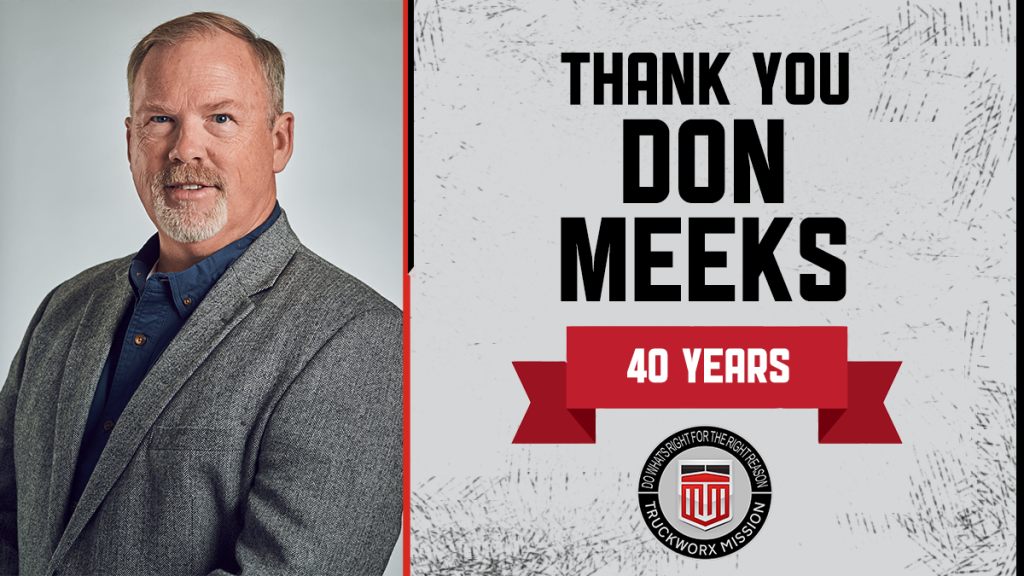
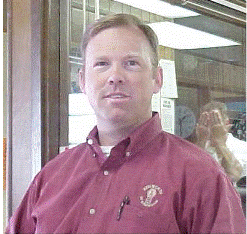
As Truckworx-Birmingham truck salesman Don Meeks celebrates his 40th anniversary with Truckworx, he took the time to sit down and share some of his favorite stories and best advice from his four decades at the company.
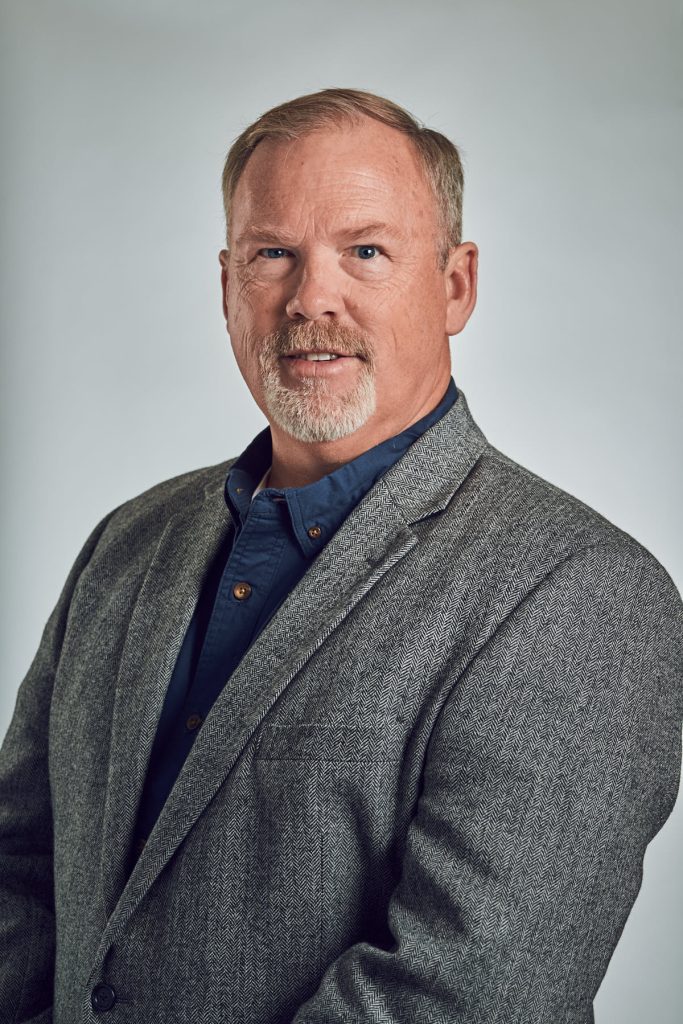
Truckworx: How did you originally get into the trucking industry, specifically here at Truckworx?
Don Meeks: My aunt and uncle knew someone who worked for City Truck and Trailer, which isn’t even in existence anymore. I was looking for a job, so I went there and put in an application. Richard Moore, the parts manager here (at Truckworx) at the time, was looking for somebody and when I went into City Truck, they said that they would have hired me on the spot if they had a place to put me. Richard called me after, so I came down to interview and they hired me here at Truckworx in 1981.
TW: Once you got here, did you plan on staying and making a career out of it, or did you have other plans for how you would move forward?
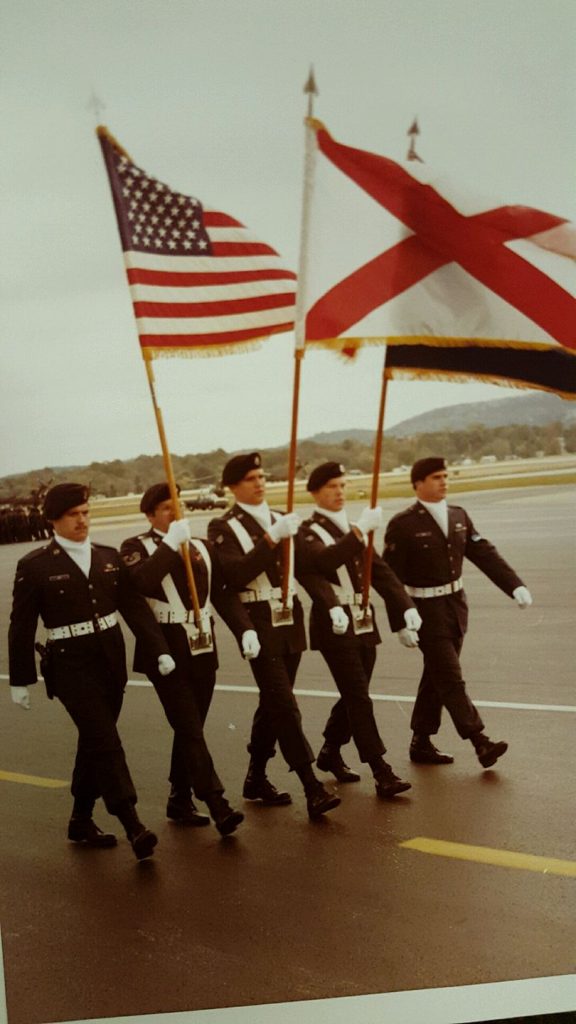
DM: My intention was to work here temporarily until someone else called me back. They never called and I never wanted to leave once I got here. For a temporary job, 40 years is a pretty long time. When I started here, I wasn’t making a whole lot of money. They were paying me just above minimum wage, which was around $4 an hour. I started out sweeping the floors, cleaning up, unloading trucks and delivering parts. That was my deal. When the economy went down in the 1980s, a lot of people left. You kind of have to do what you have to do as a company when that happens, so they brought me inside and I started selling parts on the counter. I also spent 10 years in the National Guard while I was here. I worked through all that. I worked in parts for six-and-a-half years.
When an outside parts job came up, they asked me if I wanted to try that and I said I did. Basically, I pushed for it and the managers sat down and asked me if I was sure that this is what I wanted to do. Of course, the way to make real money is to get on commission and I knew that. I understood that part of it. I said, “If you’ll just give me a chance, I’ll make it.” They said, “There are only two directions. Either up or out. You either do it or you don’t.” That is really what spurred my career. Once I got to calling customers and selling parts, it took off. I liked it. It clicked.
TW: What made you want to make the switch from selling parts to selling trucks?
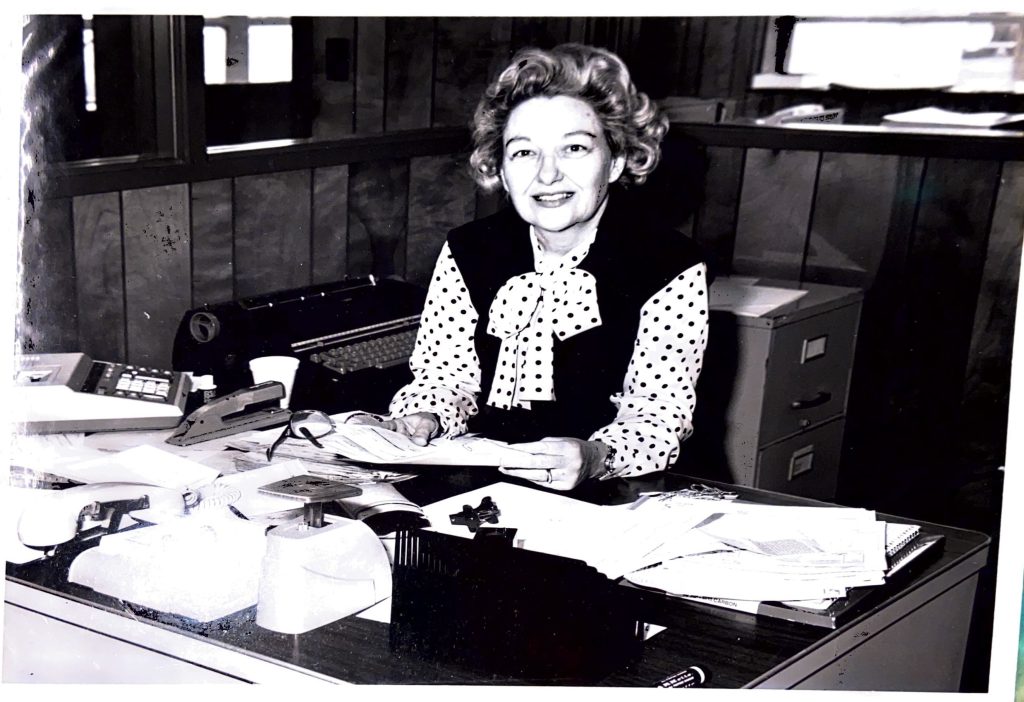
DM: The guy who was in parts sales before I was originally moved into truck sales. About three years later, he decided he didn’t want to sell trucks. He came to me and said, ‘I am about to move over to run the body shop. Would you like to take my position?’ I said that if they would ask me or say something about it, I would definitely be interested. I was young and scared to death to think that I was going to jump from this position, which I was doing very well in, into an unknown, selling trucks. I was 27 or 28 years old at that time. Betty Mitchell (former company secretary and wife of Truckworx co-founder B.B. Mitchell) really encouraged me to do that. Really, if you think about who encouraged me to take the dive over into truck sales, it was Betty. We would sit back in the little lunchroom. She was always a bundle of encouragement and advice. She would always push me to do what I knew I could do.
TW: Did you know right away that selling trucks is what you were going to do for the next three decades-plus, or did you have some afterthoughts about it?
DM: I was in it for about eight months and I thought, “What in the world have I done to myself?” I got a call asking how things were going one day and I said, “I don’t know if I’m coming or going. Really, there was so much information coming at me.” I got the advice from B.B. to work the job for a year – and to not determine whether I liked it or not. And then I gave it another year to figure out if I still wanted to do it or not. That was the best thing that anybody could have ever told me. For the first year, you don’t know what you’re doing. The second year, you’re just starting to get your hands on it. The third year is when it will start clicking. That is really when it started happening. You really have to give yourself three years in this job to figure out if you want to do it or not.
Once you get comfortable with it and really learn, things start catching on and kicking in. It’s like any job you do. This is a hard job. It’s a difficult job. I have seen a lot of people come in here and think that they will set the world on fire. It’s not a truck that sits out there on the yard that you’re going to sell, though. You are building another company’s platform that they will work off of. If you make a mistake and you put a truck into a job that doesn’t work for that job, it’s a disaster for everybody. If I have someone looking to buy a truck and I sell him a stock truck without researching what he needs it for because it’s easy, it never ends well. You have to really listen to what the customer says. Sometimes he doesn’t know what he needs. You have to go out to the job site to see what’s going on sometimes. You have to build a truck for every little part of what the customer needs it for. Even if he has a need for a small part of the job time, you have to build the truck for that as well, because that’s where it might break down for you.
TW: Are there any stories that stick out to you when you think back on the time you’ve spent here so far?
DM: There was a customer years ago when we first got into the dump truck business. He told me, “Do not bring that truck down here. I do not want to see it. I’ve already made my mind up that I’m buying something else.” I brought it down there anyway. When I came driving up, he threw a fit. Everybody came out and looked at it and by the time the day was over, I sold that truck to him and he gave me an order for five more.
TW: What do you see as the most important aspect of what you do?
DM: I have to build any truck to be safe because the thing about it is, I am putting that truck on the same highways and roads that my kids are on. That my wife is on. That the school bus is on. So, the responsibility is tremendous. If I build a truck with insufficient brakes on it and something happens, how would I live with that? That really hits home. It is my responsibility.

TW: Now, looking back, how do you view that original decision to stay with truck sales when it may have been difficult to do so?
DM: I’ve really enjoyed doing this. I’ve met a lot of people. I’ve sold a lot of trucks. I’ve been a lot of places. I’ve won World’s Best (awarded by Kenworth Truck Company to the most outstanding salespeople in the nation) 15 times. I have a nice ring for it. They don’t even give the ring anymore. It has been good to me. Truckworx is a great place to work and I tell everyone who comes in here that they need to stick with it. I have seen people leave Truckworx and then, two or three years later, they come back because it’s such a good work environment. I plan on staying here until I retire. Over the years, I have made a lot of friends; some are still here and some are gone. It has been a good role. I have enjoyed working here and I still enjoy working here every day.
Thank you, Don, for your contribution to Truckworx and the transportation industry as a whole over the past four decades. Your dedication to doing what’s right for the right reason is something that we all should strive to achieve!